
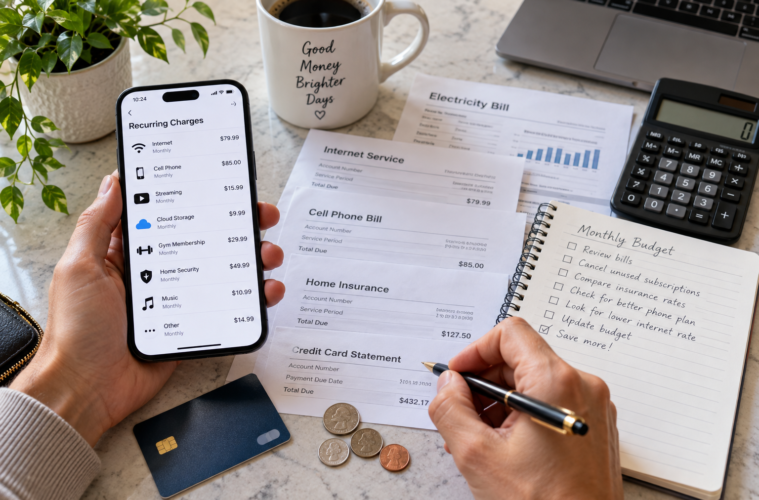
Monthly bills have a sneaky way of becoming invisible.
You sign up for internet service, choose an insurance company, add a few streaming subscriptions, and put everything on autopay.
Then months or years go by without ever asking a very important question:
Am I still getting a good deal?
Companies know many customers won’t regularly compare prices or reconsider services they’ve been paying for automatically.
That can leave plenty of opportunities to cut expenses without dramatically changing your lifestyle.
Here are 10 monthly bills worth reviewing in 2026.
1. Your Internet Bill
Internet service is one of the first bills worth checking.
You may be paying for more speed than your household actually needs, renting equipment you could replace, or paying a rate that increased after an introductory promotion ended.
Start by looking at exactly what your current plan includes.
The FCC requires internet providers to display Broadband Consumer Labels that show information including monthly price, speeds, data allowances and certain fees. These labels can make comparing plans considerably easier.
Then compare your current service with other plans available at your address.
Even staying with the same provider may offer opportunities to switch plans or remove services you no longer need.
2. Your Cell Phone Plan
Unlimited data sounds wonderful.
But how much data do you actually use?
Many households sign up for expensive unlimited plans and never revisit them.
Check your last several months of usage and compare it with what you’re paying for.
Prepaid carriers and lower-cost plans can sometimes provide enough data for considerably less money, especially for people who spend much of their day connected to Wi-Fi.
Don’t compare price alone, though. Coverage, data priority, hotspot access and international features can vary between plans.
The goal isn’t necessarily to find the cheapest phone plan.
It’s to stop paying for features you don’t use.
3. Streaming Services
One streaming subscription may not seem expensive.
Five or six of them are a different story.
Streaming services, music subscriptions, premium channels and other digital memberships can quietly accumulate because they’re usually billed automatically.
Go through your credit card and bank statements and make a list of every recurring entertainment charge.
Then ask yourself when you last actually used each service.
Subscription spending continues to grow in the U.S., making recurring charges an increasingly important place to look for savings.
You don’t necessarily have to abandon streaming.
Rotating subscriptions can work well. Keep one or two services, watch what you want, cancel them and subscribe to something else later.
There is no award for maintaining simultaneous access to every television show humanity has ever produced.
4. Auto Insurance
Insurance isn’t a bill you should simply set and forget.
Rates can change even if you haven’t had an accident.
Shop around periodically and compare quotes using the same coverage limits and deductibles so you’re making a fair comparison.
The National Association of Insurance Commissioners recommends shopping around and asking insurers about available discounts. Discounts may be available for things such as multiple vehicles, low mileage, good driving records, safety equipment or bundling home and auto coverage.
Just don’t reduce important coverage purely to make the monthly number smaller.
Cheap insurance becomes considerably less exciting when you actually need to use it.
5. Homeowners or Renters Insurance
Your home insurance deserves the same review.
Compare your current premium with quotes from other insurers and ask whether you’re receiving all available discounts.
Homeowners may qualify for discounts related to security systems, certain home improvements or bundling policies.
Increasing your deductible can sometimes reduce premiums too, although you should only choose a deductible you could realistically afford after a loss.
For renters, make sure the amount of coverage still reflects what you actually own.
Saving money is useful.
Being underinsured isn’t.
6. Subscription Apps
This category is different from streaming.
Think fitness apps, photo editors, cloud tools, productivity apps, dating apps, AI services, children’s apps and anything else charging your card every month or year.
A $4.99 subscription barely gets your attention.
Ten forgotten $4.99 subscriptions certainly should.
The FTC continues to pursue companies over allegedly deceptive recurring subscription and cancellation practices, which is another good reason to pay attention to exactly what’s hitting your accounts.
Review your Apple or Google subscriptions along with your credit card statements.
Cancel anything you’re no longer using.
The FTC also recommends continuing to watch statements after canceling to make sure recurring charges actually stop.
7. Cable or Live TV
If you’re paying for traditional cable or a live-TV streaming package, look closely at what you’re actually watching.
Sports and live programming may make these services worthwhile for some households.
Others may discover they’re paying a large monthly bill while spending most of their viewing time on Netflix, YouTube or another streaming service anyway.
Check the entire bill, not merely the advertised package price.
Equipment, additional boxes and premium services can increase the total.
If you still use cable regularly, compare available packages before canceling everything.
The point is to eliminate waste, not declare war on television.
8. Home Security
Home security systems can come with monthly monitoring charges, equipment payments and additional service fees.
If you’ve had the same system for years, review your contract and determine exactly what you’re paying for.
You may now own equipment that was originally financed.
You may also find competing monitoring plans or newer systems with different pricing structures.
Before changing providers, check whether you’re still under contract and whether your existing equipment will work with another service.
9. Gym Memberships
A gym membership you regularly use can be money well spent.
A gym membership you haven’t used since February is a recurring donation to a building full of treadmills.
Look at how often you’ve actually visited during the past few months.
If you use the gym consistently, keep it.
If you don’t, consider canceling, switching to a less expensive membership or using equipment you already own.
The same rule applies to boutique fitness memberships and workout apps.
Pay for the exercise you actually do, not the exercise your January self imagined you’d do.
10. Credit Card Interest
This isn’t technically a subscription, but it can be one of the most expensive recurring charges in a household budget.
If you’re carrying credit card balances from month to month, check the APR on every card.
Then look at how much of each payment is going toward interest rather than reducing the balance.
Paying additional money toward high-interest debt can reduce future interest charges.
Depending on your credit and circumstances, a legitimate balance-transfer offer with a temporary introductory rate may also help, but transfer fees and the rate after the promotional period matter.
The important thing is to know what the debt is costing you.
Ignoring the APR doesn’t make the interest stop. Credit card companies have somehow resisted implementing that feature.
Start With Your Bank and Credit Card Statements
You don’t need a complicated budgeting system to begin.
Pull up the last two or three months of bank and credit card statements.
Look specifically for charges that repeat.
Then divide them into three groups:
Things you use and want.
Things you need but might be able to get cheaper.
Things you forgot you were paying for.
The third category is the easiest money to recover.
The second category may produce the biggest long-term savings.
Don’t Cut Everything Just Because You Can
Saving money shouldn’t mean eliminating everything enjoyable from your life.
If you use Netflix every night, you probably don’t need to cancel Netflix to prove you’re financially responsible.
If your expensive gym membership gets you exercising four days a week, it may be worth every dollar.
Focus on expenses that aren’t providing enough value for what they cost.
That’s a much more sustainable strategy than cutting every enjoyable expense for two weeks and then abandoning the entire budget.
Final Thoughts
Lowering your monthly expenses doesn’t always require a dramatic lifestyle change.
Sometimes it simply requires looking at bills you’ve stopped noticing.
Internet.
Cell phone service.
Insurance.
Subscriptions.
Cable.
Apps.
Even cutting $10 or $20 from several recurring bills can add up because the savings repeat every month.
The companies billing you certainly haven’t forgotten about your subscriptions.
It’s probably worth remembering them yourself.
Frequently Asked Questions
What monthly bills should I review first?
Start with recurring expenses that can vary significantly between providers, including internet, cell phone service, insurance and subscriptions. Also review credit card statements for recurring charges you may have forgotten.
How often should I compare my monthly bills?
A review once or twice a year is a reasonable habit for many household expenses. Insurance may also be worth comparing around renewal time or after major changes to your household.
Should I cancel all my subscriptions to save money?
No. Keep subscriptions you regularly use and value. Focus first on forgotten subscriptions, overlapping services and memberships you rarely use.
Can I save money by increasing my insurance deductible?
A higher deductible can sometimes lower insurance premiums, but it also increases what you would have to pay out of pocket after a covered loss. Choose a deductible you could realistically afford.
Helpful Products
- Check this out on Amazon: Budget Planner
- Check this out on Amazon: Expense Tracker Notebook
- Check this out on Amazon: Smart Power Strip
- Check this out on Amazon: WiFi Router
Disclosure: This article may contain affiliate links. If you purchase a product through one of our links, MoneyNation may earn a small commission at no additional cost to you. Please read our Affiliate Disclosure.