
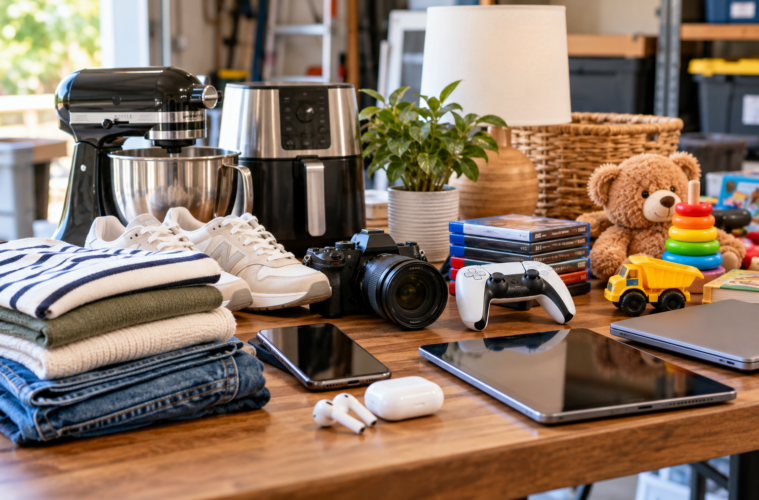
Making extra money doesn’t always require a second job, a complicated side hustle, or an investment in equipment.
Sometimes, the easiest place to start is your own house.
Between closets, garages, kitchen cabinets, and storage bins, many households have perfectly usable items collecting dust. Some of those things could be worth more than you think.
And unlike starting a side business, selling something you already own can potentially put money in your pocket within days.
Here are seven things worth looking for around your home, along with practical tips for selling them without turning your entire weekend into a full-time job.
1. Old Smartphones, Tablets, and Electronics
That old smartphone sitting in a drawer might still have resale value, even if it’s several years old.
Used electronics are popular because buyers often want a less expensive alternative to purchasing brand-new devices.
Items worth checking include smartphones, tablets, laptops, smartwatches, gaming consoles, and wireless headphones.
Before listing anything, search eBay’s sold listings to see what similar devices have actually sold for. Asking prices can be wildly optimistic, but completed sales give you a better idea of what buyers are willing to pay.
You can also compare trade-in offers from retailers and electronics-buyback companies.
A trade-in may pay less than a private sale, but it can be significantly easier.
Where to sell: eBay, Swappa, Facebook Marketplace, or electronics trade-in programs.
Quick tip: Back up your information, sign out of accounts, remove activation locks, and perform a factory reset before handing over any device.
2. Kids’ Clothes, Toys, and Baby Gear
Children have an impressive ability to outgrow expensive things approximately five minutes after you buy them.
Fortunately, gently used children’s items can have a second life.
Look for clothing bundles, LEGO sets, dolls, play kitchens, bikes, scooters, and other toys that are still in good condition.
Selling clothes in size-based bundles can be easier than listing individual shirts and pants.
For example, a collection of clean, gently used 4T clothing may attract a parent who wants to purchase several items at once.
Larger toys and play equipment can work particularly well for local pickup because shipping them is inconvenient.
Where to sell: Facebook Marketplace, local parent groups, Once Upon A Child, or eBay.
Quick tip: Check for product recalls before selling baby equipment, car seats, cribs, or other safety-related items. Some used products should not be resold.
3. Small Furniture and Home Decor
You don’t need antique furniture to make money selling household items.
Nightstands, bookshelves, mirrors, lamps, accent chairs, and small tables can all attract local buyers.
Smaller furniture is often easier to sell because buyers can transport it without renting a truck.
Presentation matters here.
A clean nightstand photographed in a bright room will usually make a better impression than the same nightstand buried under boxes in a garage.
Take several pictures, include measurements, and mention any scratches or damage.
Where to sell: Facebook Marketplace, OfferUp, or local neighborhood groups.
Quick tip: Include the dimensions in your listing. You’ll save yourself from answering the same question repeatedly.
4. Tools and Garage Equipment
Garages are full of items that were purchased for one project and then forgotten.
Power drills, saws, ladders, tool sets, pressure washers, and gardening equipment may still have resale value.
Recognizable brands and working power tools can attract buyers, particularly when the items are clean and include their original batteries or accessories.
Before listing a tool, test it and make sure it’s safe to operate.
If it needs repairs or is missing components, disclose that clearly.
Where to sell: Facebook Marketplace, OfferUp, eBay, or local tool resale shops.
Quick tip: Photograph the tool powered on when appropriate, and include pictures of the model number so buyers can verify specifications.
5. Brand-Name Clothing, Shoes, and Handbags
Not every piece of clothing has meaningful resale value.
But certain brands, styles, and categories can sell surprisingly well.
Look for athletic shoes, jackets, designer handbags, premium denim, outdoor apparel, and clothing that still has its original tags.
Condition matters.
Clean items with clear photos and accurate descriptions are generally easier to sell than clothing with vague listings.
For expensive handbags or other frequently counterfeited products, buyers may also expect proof of authenticity.
Where to sell: Poshmark, eBay, Depop, or local consignment stores.
Quick tip: Check sold prices before listing. A brand-name item isn’t automatically valuable just because it was expensive when new.
6. Kitchen Appliances You Rarely Use
Remember the kitchen appliance you were convinced would change your life?
If it hasn’t left the cabinet in two years, it might be a better candidate for resale than another round of kitchen organization.
Air fryers, stand mixers, espresso machines, bread makers, and food processors can all be worth checking.
Appliances from recognizable brands may attract more interest, especially if they’re clean, working, and include all their accessories.
Local selling is often easiest for heavy appliances because shipping costs can eat into your profit.
Where to sell: Facebook Marketplace, OfferUp, or local resale groups.
Quick tip: Clean the appliance thoroughly and photograph the included attachments. Buyers want to know exactly what they’re getting.
7. Video Games, Collectibles, and Hobby Equipment
Some of the most valuable things in your home might be items you haven’t thought about in years.
Video games, older gaming systems, trading cards, musical instruments, cameras, sports equipment, and hobby supplies can attract specialized buyers.
However, collectibles are also a category where people frequently overestimate value.
An item being old doesn’t automatically make it rare.
And an online listing asking $500 doesn’t mean someone will actually pay $500.
Check completed sales for the exact model, edition, condition, or version.
For trading cards and other collectibles, condition and authenticity can make an enormous difference.
Where to sell: eBay, specialized collector marketplaces, Facebook Marketplace, or local hobby shops.
Quick tip: Research collectible items before selling them in bulk. Some individual pieces may be worth significantly more than the rest.
How to Figure Out What Your Stuff Is Actually Worth
One of the biggest mistakes people make when selling used items is pricing them based on what they originally paid.
Unfortunately, buyers generally don’t care that your coffee machine cost $250 three years ago.
They care about what a comparable used coffee machine costs today.
A better approach is to research actual selling prices.
Search for your exact item, compare its condition with similar listings, and check recently completed sales whenever possible.
Then decide whether your priority is getting the highest price or selling quickly.
If you want an item gone this weekend, pricing it competitively may make more sense than holding out for an extra $15.
Remember to account for selling fees, shipping supplies, and transportation costs.
Where Should You Sell Your Items?
Different selling platforms work better for different products.
| Platform | Best For |
|---|---|
| Facebook Marketplace | Furniture, toys, appliances, and local pickup |
| eBay | Electronics, collectibles, and specialty items |
| Poshmark | Clothing, shoes, and accessories |
| OfferUp | Tools, furniture, and local household items |
| Consignment stores | Clothing and accessories you don’t want to list yourself |
| Trade-in programs | Electronics when convenience matters more than maximum resale value |
There’s no single best platform for everything.
A bulky bookshelf might sell quickly to someone nearby, while a collectible video game could reach more interested buyers through a national marketplace.
How to Sell More Without Spending Your Entire Weekend
Selling unwanted items should make your life easier, not create a new source of stress.
Start by choosing five to ten things you no longer use.
Clean them, take clear photos in natural light, and write straightforward descriptions.
Include the brand, model, condition, dimensions when relevant, and anything that’s missing or damaged.
Then price them based on comparable sales.
You don’t need professional photography or elaborate descriptions.
You need buyers to understand what you’re selling and whether it’s worth their money.
If an item receives no interest, reconsider the price or the platform before assuming it has no value.
Watch Out for Marketplace Scams
Selling online is convenient, but scammers know that people are eager to make quick money.
Be cautious of buyers who send suspicious payment links, request verification codes, offer to overpay, or insist on unusual payment arrangements.
Never share a one-time security code with someone claiming they need it to complete a purchase.
For local transactions, consider meeting in a public location during daylight hours. Some police departments provide designated exchange areas.
For expensive items, use a payment method you understand and confirm payment through your own account rather than relying on screenshots.
And never ship an item simply because someone emails you a supposed payment confirmation.
A little caution can prevent an easy weekend sale from becoming an expensive mistake.
What Should You Do With the Extra Money?
Once you’ve sold a few items, it’s tempting to treat the proceeds as free spending money.
But selling things you no longer need can also be a useful way to improve your finances.
You might put the money toward paying down a credit card, covering an upcoming expense, or building an emergency fund.
If you’re working on building an emergency fund even when you’re starting at $0, selling unused household items can provide a helpful initial deposit.
Or, if your goal is to generate income beyond a single weekend, consider realistic side hustles that can actually make money in 2026.
Just remember that selling personal items occasionally is different from regularly buying products specifically to resell for profit.
That distinction can matter for recordkeeping and taxes.
Do You Have to Pay Taxes on Things You Sell?
Selling used personal belongings doesn’t automatically mean you owe income tax.
Generally, if you sell a personal item for less than you originally paid, the loss isn’t deductible, but the sale typically doesn’t create taxable profit.
If you sell something for more than your original purchase price, the gain may be taxable.
For example, selling a used couch for $100 when you originally paid $600 generally doesn’t create taxable income.
But selling a collectible for $800 when you originally paid $200 may create a taxable gain.
Online marketplaces and payment processors may also issue tax forms depending on applicable reporting requirements.
Receiving a tax form doesn’t necessarily mean every dollar reported is taxable income.
Keep basic records of what you sold, what you originally paid when known, and any related selling fees.
For more information, visit the IRS guidance on selling personal items online at https://www.irs.gov/businesses/gig-economy-tax-center.
Final Thoughts
Making extra money doesn’t always require doing more work.
Sometimes, it starts with getting rid of things you no longer need.
An old phone, a forgotten kitchen appliance, or a few boxes of children’s toys might not seem particularly valuable on their own.
But several small sales can add up.
Start with items that are easy to photograph, simple to price, and likely to attract local buyers.
You might clear out some much-needed space while giving your finances a little extra breathing room.
And unlike most side hustles, this one comes with a bonus.
Your house gets cleaner.
Frequently Asked Questions
What are the easiest things to sell for quick cash?
Electronics, small furniture, tools, children’s toys, and working kitchen appliances are often good starting points because buyers can easily understand their value.
Where can I sell things quickly?
Facebook Marketplace and OfferUp are useful for local sales. eBay can be better for specialty items, collectibles, and products that appeal to buyers nationwide.
How much money can I make selling things around my house?
It depends on what you own, its condition, local demand, and how you price it. Some households may make only a small amount, while others have valuable electronics, tools, or collectibles worth significantly more.
Is selling on Facebook Marketplace free?
Many local, in-person transactions don’t involve a platform selling fee, but fees can apply to certain transactions or selling features. Review the platform’s current terms before listing.
Do I have to report money from selling used items?
Selling personal belongings for less than their original purchase price generally doesn’t create taxable income. Gains from selling items for more than their cost may be taxable, and reporting requirements can apply.
Disclosure: This article may contain affiliate links. If you purchase a product through one of our links, MoneyNation may earn a small commission at no additional cost to you. Please read our Affiliate Disclosure.
Helpful Products
- Check this out on Amazon: Digital Shipping Scale
- Check this out on Amazon: Thermal Shipping Label Printer
- Check this out on Amazon: Self-Sealing Shipping Bags
- Check this out on Amazon: Portable Photo Light Box