
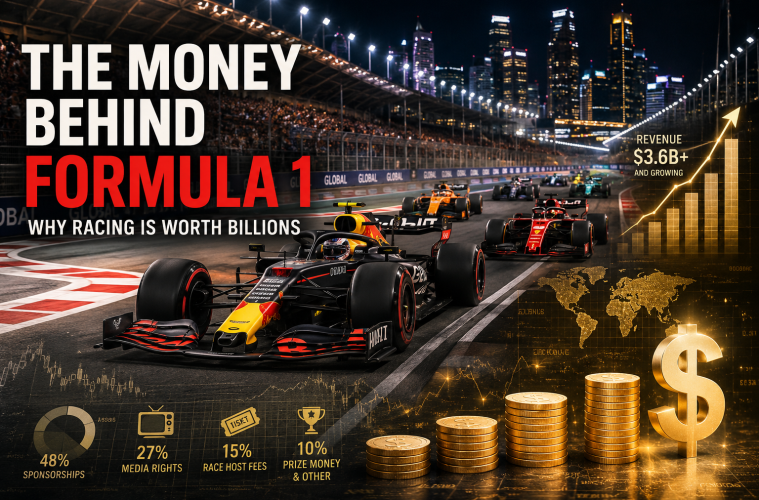
Formula 1 is known for lightning-fast cars, world-class drivers, and glamorous races in cities like Monaco, Miami, and Las Vegas. But behind the excitement is an incredibly profitable business that generates billions of dollars every year.
From television deals and sponsorships to race hosting fees and team valuations, Formula 1 has transformed itself into one of the most valuable sports leagues in the world. Here’s a look at where all that money comes from.
Television and Streaming Rights
One of Formula 1’s largest revenue sources is broadcasting.
Television networks and streaming services around the world pay enormous sums for the right to air races. Because Formula 1 has a global audience that spans nearly every continent, those media rights have become increasingly valuable.
As viewership continues to grow, especially in the United States, broadcasters are willing to pay even more for exclusive coverage.
Sponsorships Worth Hundreds of Millions
Formula 1 attracts some of the world’s biggest brands.
Companies in technology, banking, airlines, luxury goods, automotive, and consumer products invest heavily to place their logos on cars, driver uniforms, and race broadcasts.
A single title sponsorship can be worth tens of millions of dollars each season, while teams often sign dozens of additional commercial partners.
These sponsorship agreements provide a significant portion of each team’s annual revenue.
Cities Pay to Host Races
Hosting a Formula 1 Grand Prix is expensive, but many cities believe it’s worth the investment.
Governments and race promoters often pay substantial licensing fees for the opportunity to host an event. In return, they hope to attract tourists, boost hotel occupancy, fill restaurants, and showcase their city to a global television audience.
The economic impact of a successful race weekend can reach hundreds of millions of dollars.
Prize Money Rewards Success
Formula 1 teams compete for more than trophies.
Each season, teams receive prize money based largely on where they finish in the Constructors’ Championship. Better performance typically means larger payouts, giving teams another incentive to stay competitive.
While the exact amounts vary from year to year, finishing near the top can mean tens of millions of dollars in additional revenue.
Teams Are Worth More Than Ever
Formula 1 teams have become incredibly valuable businesses.
Growing fan interest, stronger commercial partnerships, and expanding media rights have pushed franchise values to record highs. Several teams are now estimated to be worth well over $1 billion.
For investors, Formula 1 teams are no longer viewed simply as racing organizations. They’re global entertainment brands with long-term growth potential.
Driver Salaries Are Only Part of the Story
Formula 1 drivers are among the highest-paid athletes in the world, with top stars earning tens of millions of dollars annually through salaries, bonuses, and endorsements.
However, driver compensation represents only a small piece of Formula 1’s financial ecosystem.
The sport generates revenue from multiple sources that extend far beyond what happens on the track.
Liberty Media Changed Everything
Formula 1 entered a new era after Liberty Media acquired the commercial rights to the sport.
The company invested heavily in digital media, social media, fan engagement, and expanding Formula 1’s presence in the United States.
Popular initiatives, including behind-the-scenes documentaries and new race locations, introduced Formula 1 to millions of new fans and significantly increased its commercial value.
Merchandise and Licensing
Formula 1 has become a merchandising powerhouse.
Fans purchase everything from team apparel and die-cast model cars to video games and collectibles. Licensing agreements allow manufacturers around the world to produce official Formula 1 products, creating another major source of revenue for both the sport and its teams.
The Future Looks Even Bigger
Formula 1 shows little sign of slowing down.
New sponsorships continue to arrive, global television audiences remain strong, and demand for race tickets often exceeds supply. As the sport expands into new markets and attracts younger fans, its financial future appears brighter than ever.
Final Thoughts
Formula 1 isn’t just one of the fastest sports in the world. It’s also one of the richest.
MoneyNation may earn a commission from qualifying purchases made through affiliate links, at no extra cost to you.
Helpful Products
If you’re interested in Formula 1, these products are worth checking out: