
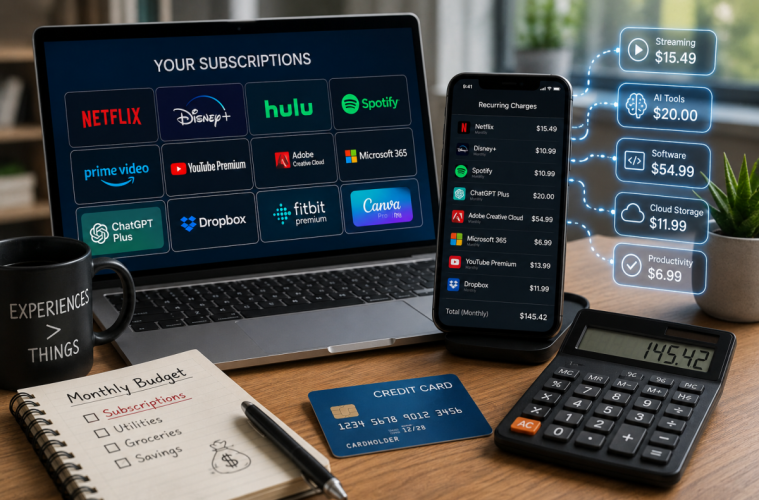
The subscription economy has changed the way we pay for almost everything.
Music, movies, cloud storage, meal kits, fitness apps, software, gaming, and even household products now come with recurring monthly payments.
Each subscription may seem affordable on its own.
But together, they can quietly consume hundreds or even thousands of dollars every year.
As subscription-based businesses continue to grow, many consumers are taking a closer look at where their money is actually going.
What Is the Subscription Economy?
Instead of paying once for a product, companies now encourage customers to pay every month.
Common subscription services include:
- Video streaming
- Music streaming
- Cloud storage
- AI tools
- Software
- Meal delivery
- Fitness memberships
- Gaming services
The model creates predictable revenue for companies while offering convenience to consumers.
Why Subscriptions Feel Affordable
One reason subscriptions are so successful is psychology.
A $9.99 monthly charge doesn’t seem like much.
Neither does another $14.99.
Or $19.99.
But after several years, those recurring payments can add up to thousands of dollars.
Because they’re automatic, many people stop noticing them altogether.
The Hidden Cost of Convenience
Subscriptions save time.
They also make spending effortless.
Consumers often sign up during a free trial and forget to cancel.
Others continue paying for services they rarely use simply because the monthly cost seems insignificant.
Over time, those small payments become a meaningful part of a household budget.
How to Audit Your Subscriptions
Review your bank and credit card statements over the past three months.
Ask yourself:
- Do I use this service every month?
- Would I subscribe again today?
- Is there a less expensive alternative?
- Can I rotate streaming services instead of paying for all of them at once?
Many people are surprised by how much they spend on recurring subscriptions.
The Companies Love This Model
Subscription businesses benefit from predictable monthly revenue.
Instead of relying on one-time purchases, companies build long-term relationships with customers.
This creates steady cash flow and helps businesses plan for future growth.
It’s one reason so many industries have adopted subscription pricing.
AI Is Creating Even More Subscriptions
Artificial intelligence has added a new category of monthly expenses.
Consumers now subscribe to:
- AI writing tools
- AI image generators
- AI coding assistants
- AI productivity platforms
As AI becomes more common, subscription spending is likely to continue growing.
Smart Ways to Reduce Subscription Costs
You don’t have to cancel everything.
Instead:
- Cancel services you no longer use.
- Share family plans when allowed.
- Rotate streaming services throughout the year.
- Review subscriptions every few months.
- Turn off auto-renew for services you don’t need.
Small adjustments can create noticeable savings over time.
Final Thoughts
Subscriptions have made many services more convenient.
But convenience has a price.
Taking a few minutes to review recurring monthly payments can help you identify unnecessary expenses and free up money for savings, investing, or other financial goals.
The goal isn’t to eliminate every subscription.
It’s to make sure each one still provides value.
FAQ
What is the subscription economy?
The subscription economy is a business model where customers pay recurring monthly or annual fees instead of making a one-time purchase.
Why do subscriptions add up so quickly?
Small monthly payments often go unnoticed, especially when multiple services renew automatically.
How often should I review my subscriptions?
A review every three to six months can help identify services you no longer use.
Helpful Products
- Check this out on Amazon: Budget Planner & Expense Tracker
- Check this out on Amazon: Accordion File Organizer for Bills & Receipts
- Check this out on Amazon: Monthly Budget Planner Notebook
- Check this out on Amazon: The Psychology of Money by Morgan Housel
- Check this out on Amazon: Atomic Habits by James Clear