
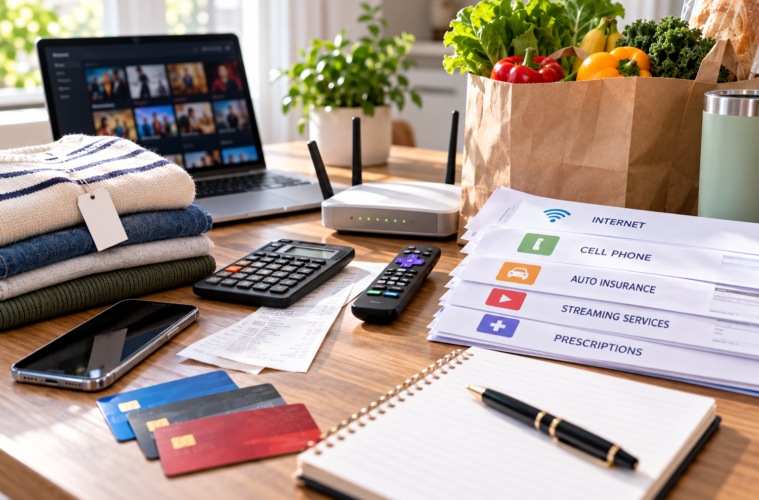
Some expenses are unavoidable.
Overpaying for them isn’t.
Companies are quite happy to keep charging you the same price month after month while reserving their better offers for new customers, shoppers who comparison shop, or anyone sufficiently annoyed to ask.
And then there are purchases where timing alone can make a substantial difference.
You don’t need to become the person holding up the grocery line with a binder containing 147 coupons. But there are certain things you should almost never buy without checking whether there’s a cheaper way to get them.
Here are nine things you should stop automatically paying full price for in 2026.
1. Cell Phone Service
If you’ve been with the same wireless carrier for years, don’t assume loyalty is getting you the best deal.
Wireless plans change constantly.
New plans appear. Old promotions expire. Family needs change. Phones get paid off. Competitors offer switching incentives.
Yet plenty of people keep paying the same bill simply because changing anything sounds annoying.
Start by looking at what you’re actually using.
Do you need unlimited premium data?
Are you paying for device protection you no longer want?
Are there lines on the account that could be moved to a cheaper plan?
Would a prepaid or lower-cost carrier work for your usage?
Then compare your current monthly total with competing plans.
You don’t necessarily have to switch. Sometimes knowing what competitors charge gives you a reason to contact your existing carrier and ask whether a better plan is available.
The important part is refusing to treat your wireless bill as a permanent number.
2. Internet Service
Internet bills deserve the same scrutiny.
Providers frequently offer multiple speed tiers, equipment options and promotional prices. The plan you signed up for several years ago may no longer be the best fit.
Start by checking exactly what you’re paying for.
The FCC requires broadband providers to provide consumer labels containing key plan information, including pricing and other details designed to make broadband plans easier to compare. The FCC updated portions of those requirements in 2026 while retaining the consumer-label framework. FCC Documentation
Compare the price of your existing plan with current offers from your provider and competitors in your area.
Also look at your speed.
Paying for extremely fast internet isn’t particularly useful if your household doesn’t actually need it.
And check equipment charges.
If you’re paying a monthly fee for hardware, determine whether buying compatible equipment would make financial sense over the long term.
Internet is one of several monthly bills you may already be overpaying without realizing it.
3. Streaming Services
Streaming was supposed to rescue everyone from expensive cable packages.
Then humanity responded by subscribing to approximately every streaming service ever invented.
One service might not seem expensive.
Neither does the second.
Or the third.
The problem becomes obvious when all those monthly charges are added together.
Instead of maintaining every service year-round, rotate them.
Subscribe when a service has something you actually want to watch. Catch up. Cancel it. Move to another one.
Also check whether any service you use is included with another product you already pay for, such as a wireless plan, internet package, credit-card benefit or membership.
And periodically review your bank and credit-card statements for recurring charges.
The FTC continues to focus on negative-option and recurring-payment practices, including how consumers are enrolled and how subscriptions are canceled. Federal Trade Commission
That’s another reason to know exactly what is hitting your accounts every month.
If you haven’t reviewed them recently, subscriptions may be quietly draining your bank account while you barely notice them individually.
4. Auto and Home Insurance
Insurance is one of those bills people often set up and then ignore.
That can be expensive.
Insurance companies don’t necessarily calculate risk or price policies identically. The National Association of Insurance Commissioners notes that different insurers can charge different rates for the same coverage, which is why comparison shopping matters. NAIC Content
That doesn’t mean you should automatically jump to whichever company produces the cheapest quote.
Compare equivalent coverage, deductibles and limits.
Then ask about available discounts.
Depending on the insurer and your circumstances, discounts may be available for things such as bundling policies, insuring multiple vehicles, certain safety equipment or other qualifying factors. NAIC Content
It’s worth shopping your policies periodically, especially after major life changes.
Just don’t save $200 a year by stripping away coverage you actually need.
Cheap insurance becomes considerably less exciting when you discover why it was cheap.
5. Brand-Name Prescription Drugs When a Generic Is Available
This one requires an important distinction.
Don’t randomly substitute medications because an article on the internet told you to save money.
Talk to your doctor or pharmacist.
But when an FDA-approved generic version of your medication is available and medically appropriate for you, it’s worth asking about.
FDA-approved generics contain the same active ingredient and must meet standards for strength, dosage form, quality and performance. The FDA says approved generics are expected to provide the same clinical benefit as their brand-name counterparts. U.S. Food and Drug Administration
Generic drugs account for more than 90% of prescriptions filled in the United States, according to the FDA. U.S. Food and Drug Administration
Prices can also vary between pharmacies and depending on insurance coverage, so compare your options when possible.
Your doctor or pharmacist can tell you whether a generic or alternative is appropriate for your particular prescription.
6. Clothing
Unless you need something immediately, there’s often little reason to pay the original price for mass-market clothing.
Retail pricing moves constantly.
Stores run seasonal sales, clearance events, promotional codes and loyalty offers throughout the year.
The trick is separating an actual deal from marketing theater.
A shirt isn’t saving you $30 if you never intended to buy the shirt until someone put a giant SALE sign over it.
For items you genuinely need, identify what you want before the sale starts.
Then wait.
End-of-season clearance can be particularly useful for basics you’ll still wear the following year.
And don’t ignore resale.
For certain clothing, children’s items and higher-quality brands, secondhand marketplaces and consignment stores can offer barely used items for substantially less than the original retail price.
7. Groceries Just Because They’re a Familiar Brand
Brand loyalty can get expensive in the grocery aisle.
Many shoppers repeatedly grab the same cereal, pantry staples, cleaning supplies and household products without comparing the unit price.
Try comparing store brands and private-label products with the national brands you normally buy.
You won’t prefer the cheaper version of everything.
That’s fine.
Saving money doesn’t require pretending every generic cookie is a spiritual experience.
Figure out where the difference matters to you and where it doesn’t.
Also pay attention to unit pricing rather than the package price alone.
A larger package isn’t automatically the better deal, and a sale price isn’t necessarily cheaper per ounce or per item.
Build your grocery strategy around what your household actually eats rather than whatever happens to have a bright promotional tag attached to it.
8. Software and App Subscriptions
Software has increasingly moved from “buy it once” to “pay us forever.”
That makes subscriptions easy to accumulate.
Photo editing.
Cloud storage.
Productivity software.
Password managers.
Fitness apps.
Budgeting apps.
AI tools.
Business software.
Each individual charge can look harmless.
Together, they can become another significant monthly bill.
At least once or twice a year, review every software and app subscription you’re paying for.
Ask:
Did I use this during the last 30 days?
Is there a free version that does what I need?
Am I paying separately for features included in another service?
Would an annual plan be cheaper for something I know I’ll keep?
Is there a competing product that costs less?
Most importantly, cancel software you forgot you had.
You cannot optimize your finances around charges you don’t even remember making.
9. Electronics at Launch
Being first is expensive.
New phones, televisions, laptops, headphones and other electronics frequently arrive at their highest-profile moment with their highest-profile price.
Unless you genuinely need the product immediately, waiting can give you more options.
Retail promotions eventually appear.
Previous-generation products get discounted.
Refurbished inventory becomes available.
Bundles emerge.
Competitors release alternatives.
And reviews have time to reveal whether the supposedly revolutionary new gadget is actually revolutionary or merely last year’s gadget with one additional button.
For major electronics purchases, decide what features you actually need before shopping.
Then compare current models with the previous generation.
The newest device isn’t automatically the best value.
Stop Confusing a Sale With Saving Money
There’s an important catch to this entire list.
Buying something because it’s discounted is still spending money.
A $200 item marked down to $120 didn’t save you $80 if you never needed it in the first place.
You spent $120.
This is part of why it’s so easy to overspend, particularly when retailers combine limited-time offers, free shipping thresholds, loyalty rewards and personalized promotions.
Before buying something on sale, ask yourself a wonderfully boring question:
Would I still want this if the sale sign disappeared?
If the answer is no, the discount is probably doing more work than the product.
Negotiate the Bills That Can Be Negotiated
People negotiate houses and cars but often assume smaller monthly bills are fixed.
Some aren’t.
Internet providers, wireless carriers and other service companies may have different plans or current offers available.
You don’t need to threaten to cancel everything you own.
Call and ask:
“I’m reviewing my monthly expenses. Are there any lower-cost plans or discounts available on my account?”
That’s it.
If nothing is available, compare competitors.
Even reducing a recurring expense by $25 per month saves $300 over a year.
Do that with three bills and suddenly the exercise becomes worth the annoying phone calls.
Use the Savings for Something Better
Saving $40 on your phone plan and then spending $40 more at Target isn’t exactly a financial breakthrough.
Give the savings somewhere to go.
You could use the money to:
Pay down high-interest debt.
Increase retirement contributions.
Build savings.
Create a sinking fund for future expenses.
Add to your emergency fund.
If you don’t have much cash set aside yet, building an emergency fund even when you’re starting at $0 gives those monthly savings a useful destination.
Automatically transferring the amount you’ve saved can make this even easier.
Lower the internet bill by $30?
Set up a $30 automatic monthly transfer to savings.
Now the money actually improves your finances instead of quietly finding another way to disappear.
Don’t Make Saving Money a Second Job
There’s also a point where optimization becomes ridiculous.
Driving 14 miles to save 11 cents on laundry detergent is not financial genius.
Neither is spending three hours researching a $15 purchase.
Focus your effort where the dollars are largest.
A $75 reduction in an insurance bill matters more than saving 30 cents on pasta.
Recurring expenses deserve particular attention because a small monthly reduction repeats twelve times a year.
Then tackle large occasional purchases where comparison shopping can produce meaningful savings.
You don’t have to squeeze every penny until Abraham Lincoln begs for mercy.
You just need to stop routinely paying more than necessary.
Final Thoughts
Paying full price isn’t always bad.
Sometimes you need something now.
Sometimes the cheaper alternative isn’t as good.
Sometimes convenience is worth paying for.
The goal isn’t to turn every purchase into a research project.
It’s to recognize the categories where prices vary enough that automatically accepting the first price can cost you money.
Review your phone plan.
Compare your internet.
Rotate streaming services.
Shop your insurance.
Ask about generic prescriptions.
Wait for clothing sales.
Compare grocery brands.
Audit your subscriptions.
Be patient with electronics.
Do that periodically and you may find hundreds or even thousands of dollars that can be used for something more important.
And unlike most dramatic money-saving challenges, you don’t have to spend the rest of your life making coffee filters out of old paper towels.
Frequently Asked Questions
What should you never pay full price for?
There isn’t anything you should literally never pay full price for, but internet and wireless service, insurance, subscriptions, clothing, groceries and electronics are all categories where comparison shopping or waiting for promotions can sometimes reduce costs.
How often should you compare your monthly bills?
Reviewing recurring expenses at least once or twice a year is a useful habit. You should also review them after a promotion expires, a contract changes, your household needs change or a provider raises its price.
Is it worth switching insurance companies to save money?
It can be, but compare equivalent coverage rather than price alone. Different insurers may charge different premiums for similar coverage, according to the NAIC. NAIC Content
Are generic prescription drugs the same as brand-name drugs?
FDA-approved generic drugs must have the same active ingredient and meet FDA requirements for areas including strength, dosage form, quality and performance. Ask your doctor or pharmacist whether a generic is appropriate for your specific medication and circumstances. U.S. Food and Drug Administration
What’s the easiest bill to cut?
Subscriptions are often a good place to start because you can identify services you no longer use without changing your everyday lifestyle. Internet, wireless and insurance bills may provide larger savings but generally require more comparison shopping.
Disclosure: This article may contain affiliate links. If you purchase a product through one of our links, MoneyNation may earn a small commission at no additional cost to you. Please read our Affiliate Disclosure.
Helpful Products
- Check this out on Amazon: WiFi Router
- Check this out on Amazon: Streaming Device
- Check this out on Amazon: Reusable Grocery Bags
- Check this out on Amazon: Smart Power Strip