
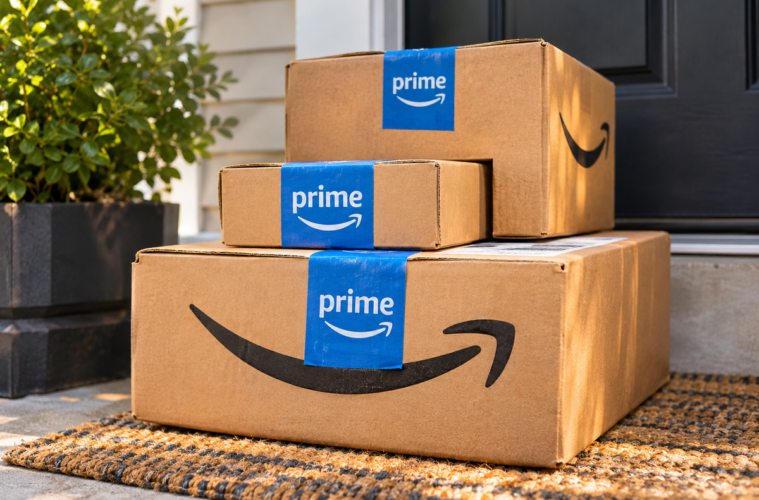
Free shipping sounds like a terrible way to make money.
After all, delivering millions of packages to customers’ doors costs a fortune. Add streaming entertainment, exclusive deals, and other membership benefits, and Amazon Prime starts looking like an unusually expensive subscription service to operate.
Yet Prime has become one of the most important parts of Amazon’s business.
Millions of customers pay for the privilege of shopping with a company that then promises to deliver many of their purchases without an additional shipping charge.
So how does that make financial sense?
The answer is that Amazon Prime isn’t simply a shipping program.
It’s a business strategy designed to change how frequently people shop, where they spend their money, and how connected they become to Amazon’s services.
And the economics go far beyond the annual membership fee.
1. Amazon Prime Starts With Recurring Membership Revenue
The most obvious way Amazon makes money from Prime is through subscription fees.
In the United States, a standard Prime membership costs $139 annually or $14.99 monthly, although pricing and eligibility vary for certain plans.
For customers, the fee provides access to a collection of benefits, including eligible fast shipping, Prime Video, and other services.
For Amazon, it creates a recurring source of revenue.
Consider the difference between a retailer that only earns money when someone buys a product and one that also collects a membership fee.
The second retailer begins the relationship with an additional revenue stream.
That doesn’t mean every membership fee becomes profit. Amazon must pay for shipping, entertainment, technology, and other benefits.
But recurring membership payments help support the larger Prime ecosystem.
Amazon reports subscription services revenue as part of its financial results, although that category includes more than Prime memberships.
As a result, the company’s total subscription revenue shouldn’t be confused with Prime membership fees alone.
2. Free Shipping Encourages Customers to Shop More Often
Here’s where the Amazon Prime business model gets interesting.
Imagine two shoppers who need a $12 household item.
The first shopper doesn’t have Prime and may need to pay a shipping fee or reach a minimum purchase amount.
The second shopper already has Prime and sees eligible shipping included with the membership.
Which shopper is more likely to complete the purchase immediately?
For many people, removing a separate shipping charge makes ordering easier.
That convenience can influence shopping habits.
Instead of waiting until several items are needed, customers may place smaller orders more frequently.
And instead of checking multiple retailers, they may start their search on Amazon.
Over time, Prime can turn Amazon from an occasional shopping destination into a routine part of household spending.
This is especially valuable because Amazon sells products across so many categories.
Groceries, electronics, cleaning supplies, clothing, gifts, pet products, and personal care items can all become part of the same shopping relationship.
The shipping benefit isn’t necessarily free for Amazon to provide.
It’s a tool that helps encourage customers to keep shopping.
3. Prime Makes Amazon the Default Shopping Destination
One of the most valuable things a retailer can achieve is becoming a customer’s first choice.
Amazon Prime helps make that happen.
Once someone has paid for a membership, they have an additional reason to use the benefits.
A shopper might think:
“I already have Prime, so I’ll just order it from Amazon.”
That decision may seem insignificant when purchasing a $15 item.
But multiply similar decisions across millions of customers and thousands of product categories.
Amazon benefits when shoppers repeatedly choose its marketplace.
This is one reason membership programs can be so powerful.
The customer isn’t simply comparing the price of a single product.
They’re also considering convenience, delivery speed, familiarity, and the value they believe they’re receiving from an existing subscription.
It’s a strategy that shares some similarities with how Costco built its business around membership fees, although Amazon’s digital marketplace and delivery network operate very differently from Costco’s warehouses.
4. Third-Party Sellers Help Power the Business
Not everything sold on Amazon belongs to Amazon.
Independent businesses and other third-party sellers account for a substantial share of the units sold through Amazon’s marketplace.
These sellers can pay Amazon for services such as selling access, fulfillment, storage, and advertising.
That creates another important source of revenue.
Imagine a small business selling a kitchen appliance for $50.
Depending on the seller’s arrangement, Amazon may earn fees for facilitating the sale.
If the seller uses Fulfillment by Amazon, or FBA, Amazon may also handle storage, packing, shipping, customer service, and certain returns.
Those services come with additional fees.
Prime eligibility can make products more attractive to shoppers who value fast delivery.
For sellers, participating in Amazon’s fulfillment system can provide access to a large customer base and established delivery infrastructure.
For Amazon, the marketplace creates opportunities to earn revenue without owning every product being sold.
This helps explain why Amazon’s business is much bigger than simply buying merchandise wholesale and reselling it.
5. Amazon Advertising Adds Another Revenue Stream
Amazon also makes substantial money from advertising.
When shoppers search for products, they may see sponsored listings from brands and sellers competing for attention.
Those businesses pay Amazon for advertising opportunities.
Prime contributes indirectly to this model by helping keep shoppers engaged with Amazon’s marketplace.
The more customers search, browse, and purchase products, the more valuable Amazon’s advertising opportunities can become.
For example, a company selling coffee makers may pay to promote its product when customers search for coffee machines.
Amazon can generate advertising revenue while shoppers browse products, even before a purchase takes place.
This is a particularly interesting part of the business because Amazon has access to shopping-related signals.
Unlike an advertisement shown to someone casually scrolling through social media, a sponsored product can appear when a customer is actively looking for something to buy.
That makes Amazon’s retail advertising business attractive to many brands.
However, Amazon’s reported advertising revenue includes advertising beyond Prime members, so it would be misleading to attribute all of that revenue directly to Prime.
6. Prime Video Makes the Membership Harder to Cancel
Fast shipping may attract many customers to Prime, but Amazon has added other benefits to make the membership more appealing.
Prime Video is one of the most recognizable.
Members receive access to a selection of movies, television series, and Amazon Originals, although certain titles, channels, rentals, and other features cost extra.
Producing and licensing entertainment is expensive.
So why would Amazon include streaming as part of a shopping membership?
Because Prime Video gives customers another reason to remain subscribed.
Someone who rarely orders packages might still value the entertainment benefits.
Another household might primarily use Prime for shopping but occasionally watch movies or television shows.
By combining different services, Amazon can make the membership useful in more situations.
That makes the subscription harder to evaluate based on any single benefit.
Customers aren’t necessarily deciding whether shipping alone is worth the membership fee.
They’re evaluating a bundle of services.
7. Prime Video Advertising Creates Additional Opportunities
Amazon has also expanded advertising within Prime Video.
In the United States, Prime Video includes limited advertisements with standard Prime access, while customers can pay an additional fee for an ad-free option, subject to exceptions.
That gives Amazon another way to generate revenue from entertainment.
The company can earn money from membership subscriptions while also selling advertising opportunities associated with its streaming content.
For advertisers, streaming television offers a way to reach viewers outside traditional cable and broadcast programming.
For Amazon, it creates another connection between its entertainment business and its broader advertising operations.
This doesn’t mean Prime Video is automatically profitable on its own.
Amazon doesn’t disclose enough standalone financial information to determine the complete profitability of Prime Video.
But advertising gives the service an additional potential source of revenue beyond membership payments.
8. Amazon’s Delivery Network Makes Prime Possible
Fast shipping isn’t magic.
It’s the result of an enormous logistics operation involving fulfillment centers, sorting facilities, transportation networks, delivery stations, technology, and workers.
Amazon has invested heavily in building and operating this infrastructure.
The company also uses regional inventory placement and delivery-network improvements to reduce the distance many packages travel.
That can help improve delivery speed and efficiency.
But the costs remain substantial.
Warehouses require buildings, equipment, utilities, technology, and employees.
Transportation requires vehicles, fuel, maintenance, and delivery capacity.
Returns create additional expenses.
And customer expectations for faster delivery can increase operational pressure.
The goal is to make the system efficient enough that the revenue generated across Amazon’s business supports the costs of providing Prime benefits.
That’s why Amazon’s delivery network is both an expensive responsibility and a competitive advantage.
A smaller retailer may struggle to offer comparable delivery convenience at the same scale.
9. Prime Helps Amazon Compete Beyond Price
Consumers often assume Amazon wins because its prices are always the lowest.
But that isn’t necessarily true.
Other retailers may offer lower prices on individual products.
Amazon’s advantage often comes from the combination of selection, convenience, delivery options, and customer familiarity.
A shopper may willingly pay a similar price, or occasionally even a little more, to avoid visiting a store or waiting longer for delivery.
That convenience can influence purchasing decisions.
Amazon’s strategy also puts pressure on competitors to improve their own delivery services, membership programs, and online shopping experiences.
Walmart, Target, and other major retailers have invested in services designed to make shopping faster and more convenient.
As competition increases, customers have more options.
But Amazon’s large existing customer base and extensive infrastructure remain important strengths.
10. The Real Value of Prime Is Customer Loyalty
The biggest lesson behind the Amazon Prime business model is that a membership can be valuable even when some individual benefits are expensive to provide.
Amazon doesn’t need to earn a large profit from every package delivered to every Prime member.
It needs the overall customer relationship to make financial sense.
That relationship can include membership fees, retail purchases, third-party seller fees, advertising, entertainment, and other services.
Some customers may use their benefits far more heavily than others.
Some orders may be more profitable than others.
And Amazon doesn’t publicly disclose a standalone profit figure for the entire Prime program.
Still, the strategic logic is clear.
Prime gives customers reasons to return, and returning customers create opportunities for Amazon to generate revenue across multiple parts of its business.
That makes Prime much more than a shipping subscription.
Is Amazon Prime Actually Worth the Money?
For consumers, the answer depends on how they use it.
A membership that makes financial sense for one household may be unnecessary for another.
If you frequently order eligible products, use Prime Video, and take advantage of other included benefits, the subscription may provide worthwhile value.
But if you rarely shop on Amazon and don’t use the entertainment services, paying an annual fee may not make sense.
It’s also important to remember that having Prime doesn’t guarantee the lowest price.
Comparing prices with other retailers can still save money.
And placing unnecessary orders simply because shipping is included can lead to spending more overall.
If you’re trying to identify subscriptions that may be quietly draining your bank account, Prime deserves the same review as any other recurring expense.
The question isn’t whether Prime offers a lot of benefits.
It’s whether those benefits are worth what your household actually pays.
What Other Businesses Can Learn From Amazon Prime
Amazon Prime illustrates several important business principles.
First, convenience can be just as valuable as price.
Second, recurring revenue can help create more predictable customer relationships.
Third, combining services can make a membership more appealing than offering a single benefit.
And finally, a product or service doesn’t always need to generate all of its value directly.
Sometimes its biggest contribution comes from encouraging customers to use other parts of a business.
Of course, not every company can afford to build a global delivery network or invest billions in entertainment.
But the underlying lesson applies to businesses of many sizes.
Creating a reason for customers to return can be more valuable than focusing exclusively on a single transaction.
Final Thoughts
Amazon Prime began as a relatively simple promise: pay a membership fee and receive faster shipping on eligible purchases.
Over time, it evolved into something much bigger.
Today, Prime helps connect Amazon’s retail marketplace, delivery network, entertainment services, advertising business, and third-party sellers.
The company collects membership fees, but the real opportunity comes from the broader relationship with customers.
That’s what makes the Amazon Prime business model so powerful.
Free shipping may be the benefit customers notice first.
But the money behind Prime comes from everything that happens after they become members.
Frequently Asked Questions
How does Amazon Prime make money?
Amazon Prime generates membership revenue and supports Amazon’s broader business by encouraging shopping activity. Amazon also earns revenue from third-party seller services, advertising, and other operations associated with its marketplace and entertainment ecosystem.
Is Amazon Prime shipping really free?
Eligible shipping is included with a paid Prime membership, but Amazon still incurs delivery costs. Customers effectively pay for access through their membership, while Amazon manages shipping expenses across its broader operations.
How much does Amazon Prime cost?
The standard U.S. membership price is $139 per year or $14.99 per month. Other plans and discounts may be available, and pricing can change.
Does Amazon make money from Prime Video?
Prime Video supports Amazon’s subscription offering and also generates advertising and other revenue opportunities. Amazon does not publicly disclose a complete standalone profit figure for Prime Video.
Why does Amazon offer so many Prime benefits?
Offering multiple benefits makes the membership useful to more customers and can encourage renewals. Shipping, streaming, and other services give members different reasons to stay subscribed.
Is Amazon Prime worth it in 2026?
It depends on how frequently you use the benefits and whether you can obtain similar products or services for less elsewhere. Reviewing your actual shopping habits is the best way to decide.